
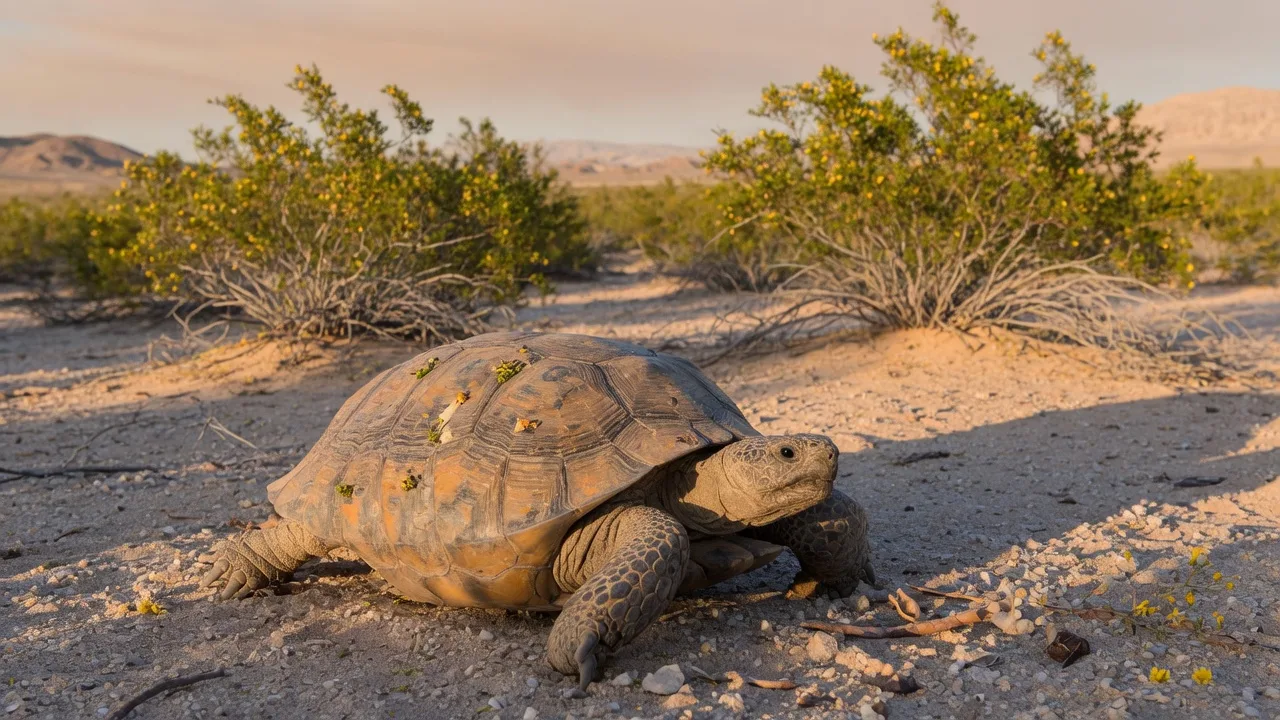
One of the joys of living in the Mojave Desert is the wildlife. The desert is far from empty. It is home to a remarkable variety of animals adapted to survive in extreme conditions. For new residents especially, understanding the wildlife that shares the Las Vegas Valley helps make living here more enjoyable and safer for both people and animals.\n\nDesert Tortoise\n\nThe desert tortoise is the most iconic protected species in Southern Nevada. It is Nevada's state reptile. Desert tortoises are slow-growing, long-lived animals that can survive for 50 to 80 years. They spend most of their lives in burrows to escape the heat. Development in the Las Vegas Valley has impacted tortoise habitat, and the species is protected under both state and federal law. If you find a desert tortoise on your property, do not move it. Contact the Nevada Department of Wildlife for guidance. In many newer communities, developers are required to relocate tortoises before construction begins. Buyers looking at homes near the desert edge should be aware of tortoise habitat considerations.\n\nCoyotes\n\nCoyotes are common throughout the Las Vegas Valley, especially in communities that border open desert areas like Summerlin, Henderson, and the edges of North Las Vegas. They are adaptable animals that have learned to live alongside humans. Coyotes are generally not aggressive toward adults, but they will prey on small pets, especially cats and small dogs left unattended. Residents should keep pets indoors at dawn and dusk, secure trash bins, and not leave pet food outside. Coyote sightings are part of normal life in many Las Vegas neighborhoods.\n\nSnakes\n\nSeveral species of snakes live in the Mojave, including rattlesnakes. The most common rattlesnake in the Las Vegas area is the Mojave rattlesnake, which is venomous and should be treated with respect. Rattlesnakes are most active in spring and fall. They avoid humans when possible and typically only strike when threatened. If you encounter a rattlesnake on a hiking trail or in your yard, give it space and do not try to move or kill it. Professional removal services are available. Most snake encounters in Las Vegas end without incident, but awareness is important.\n\nScorpions\n\nScorpions are present in the Mojave Desert. The most common species in the Las Vegas area is the bark scorpion, which is venomous but rarely dangerous to healthy adults. Scorpions are nocturnal and hide in cool, dark places during the day. They can enter homes through small cracks and gaps. Sealing entry points, keeping yards clear of debris, and using pest control services can minimize encounters. Scorpion stings are painful but typically not life-threatening.\n\nWhy Buyers Should Pay Attention\n\nUnderstanding desert wildlife is part of being an informed home buyer in Las Vegas. Communities that border open desert are more likely to have wildlife encounters. HOAs in many communities provide guidelines for coexisting with local animals. Homes with pools may attract more wildlife seeking water. Buyers who understand these dynamics can make better decisions about where to live and how to enjoy their property. The wildlife is part of what makes living in the desert special, and with the right knowledge, it is easy to share the landscape safely.
Desert Wildlife Las Vegas Residents Should Know About

Reviewed by
Lisa C Hamilton, REALTOR®
Lisa C Hamilton is a Las Vegas Valley REALTOR® affiliated with THE Brokerage, A Real Estate Firm®, helping buyers, sellers, investors, and relocating clients across Clark County and Greater Las Vegas with local market knowledge, property research, and direct personal representation. Nevada License S.168195.
Ready to Talk Real Estate?
Ask Lisa, get a free Property DNA report, or find out what your Nevada home is worth.
Property DNA reports are free, available nationwide, with no limit on how many you can order. Enter your contact information once and request reports for multiple property addresses. Reports are delivered by email, usually within one hour during normal business hours. A Property DNA report is not a title search, title commitment, title insurance policy, appraisal, inspection, survey, or legal or tax advice.