
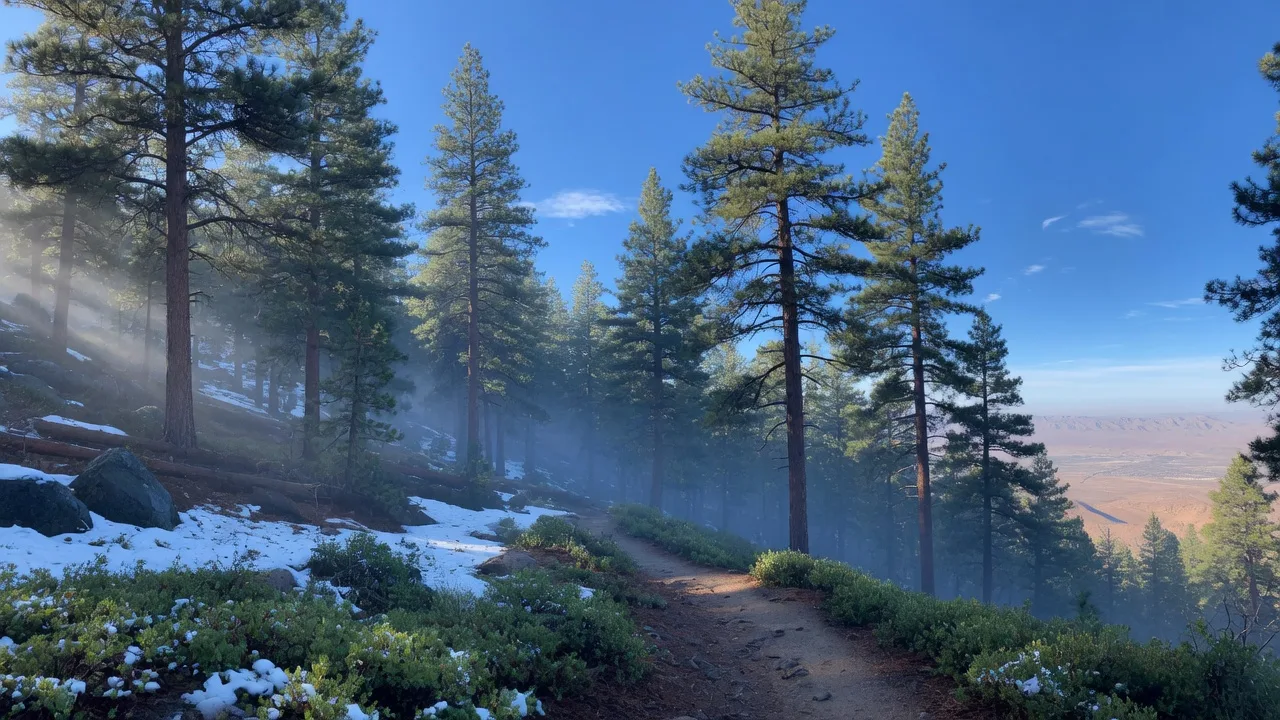
Mount Charleston is the name commonly used for the Spring Mountains National Recreation Area, a forested mountain range that rises to 11,918 feet at Charleston Peak. It sits about 45 minutes northwest of downtown Las Vegas and offers a dramatically different environment from the desert below. For Las Vegas residents, it is the closest escape from summer heat and the only place in Southern Nevada where you can find snow in winter.\n\nA Different Climate\n\nThe elevation difference between Las Vegas and Mount Charleston is striking. Las Vegas sits at about 2,000 feet above sea level. The Mount Charleston area ranges from 7,000 to nearly 12,000 feet. That elevation gain means temperatures are typically 20 to 30 degrees cooler than the valley floor. On a 110-degree summer day in Las Vegas, you can drive to Mount Charleston and find 80-degree temperatures with cool breezes. In winter, the mountain receives significant snowfall while the valley stays dry and mild.\n\nHiking and Trails\n\nMount Charleston offers some of notable hiking in Southern Nevada. The Mary Jane Falls Trail is a moderate 3-mile round trip that leads to a seasonal waterfall. The Cathedral Rock Trail offers dramatic views of the surrounding peaks and valley. The Fletcher Canyon Trail is an easier option suitable for families. For experienced hikers, the Charleston Peak Trail is a challenging 17-mile trek to the highest point in the Spring Mountains. All trails are marked and maintained by the U.S. Forest Service.\n\nWinter Recreation\n\nThe Las Vegas Ski and Snowboard Resort at Lee Canyon operates on the northern side of Mount Charleston. It offers downhill skiing and snowboarding on 30 trails served by four lifts. The resort also has a terrain park and a tubing hill. Snowshoeing and cross-country skiing are popular on the forest service roads. Snowfall typically arrives in December and lasts through March.\n\nHistoric Retreat and Lodging\n\nThe Mount Charleston Lodge has been a retreat for visitors since the 1930s. The original lodge burned down in 2020, but a new facility has been built in its place, offering dining with mountain views. The area also has campgrounds including Fletcher View and Cathedral Rock, which are popular in summer months.\n\nThe Real Estate Connection\n\nProximity to Mount Charleston is a selling point for homes in the northwest part of the valley. Communities like Centennial Hills, Skye Canyon, and the western areas of Summerlin offer relatively quick access to the mountain. For buyers who value outdoor recreation and the ability to escape the summer heat, homes in these areas are particularly appealing. While there are no residential developments on the mountain itself, the ability to reach it within 30 to 45 minutes from many parts of the valley adds to the quality of life for Las Vegas residents.\n\nMount Charleston is a reminder that Southern Nevada is not just desert. It is a region of remarkable ecological diversity, with alpine forests rising above the valley floor and recreational opportunities available in every season.

Reviewed by
Lisa C Hamilton, REALTOR®
Lisa C Hamilton is a Las Vegas Valley REALTOR® affiliated with THE Brokerage, A Real Estate Firm®, helping buyers, sellers, investors, and relocating clients across Clark County and Greater Las Vegas with local market knowledge, property research, and direct personal representation. Nevada License S.168195.
Ready to Talk Real Estate?
Ask Lisa, get a free Property DNA report, or find out what your Nevada home is worth.
Property DNA reports are free, available nationwide, with no limit on how many you can order. Enter your contact information once and request reports for multiple property addresses. Reports are delivered by email, usually within one hour during normal business hours. A Property DNA report is not a title search, title commitment, title insurance policy, appraisal, inspection, survey, or legal or tax advice.