
Published: October 11, 2026
By: Lisa C. Hamilton | The Brokerage | Las Vegas, Nevada
Category: Las Vegas Living | Homeowner Resources | Property Protection | Emergency Preparedness
Safety Notice: Never drive through floodwater. Move to higher ground when necessary, follow official emergency instructions, and call 911 during life-threatening emergencies.
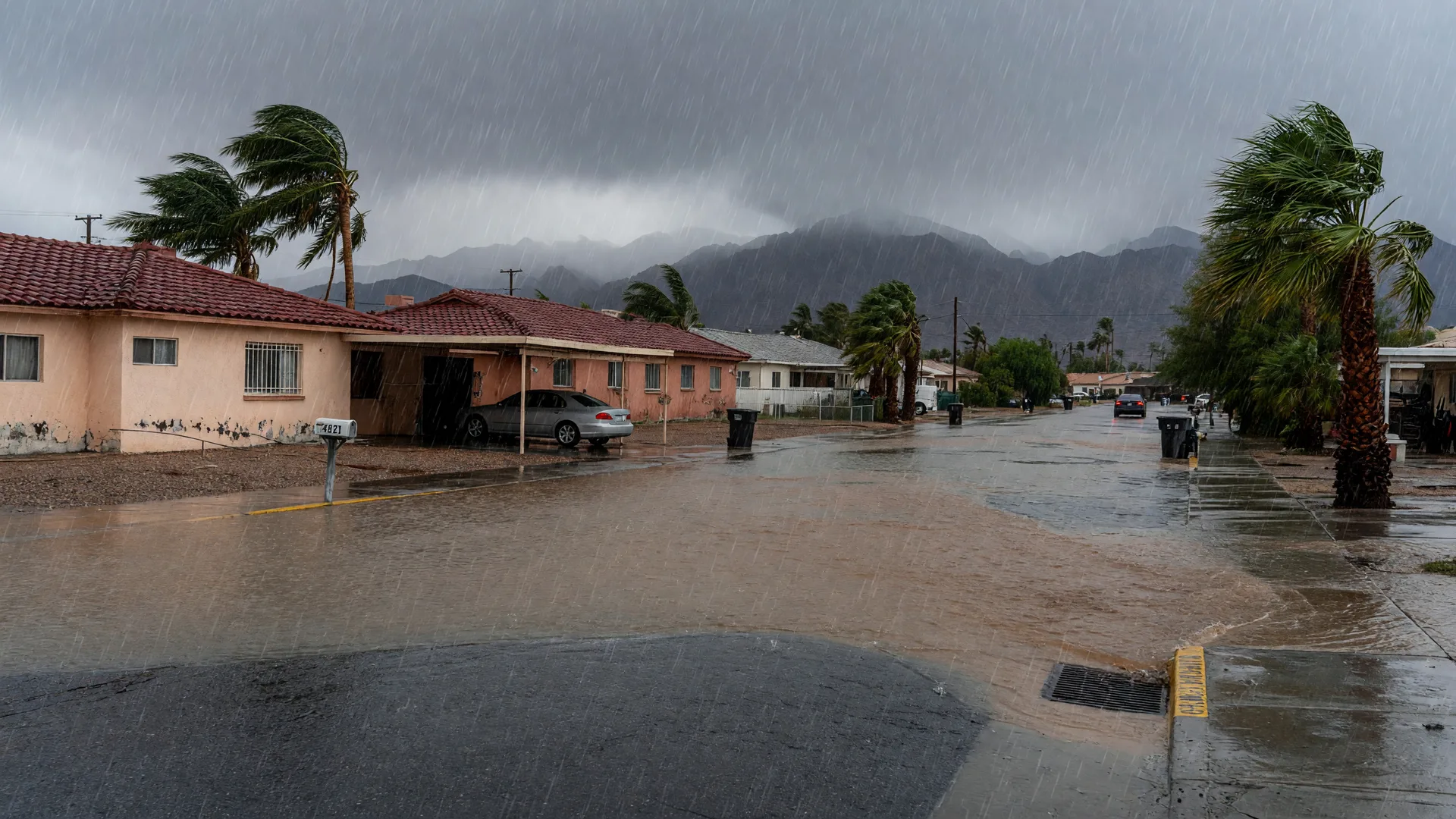
Las Vegas is famous for sunshine, desert landscapes, and more than 300 days of beautiful weather each year. But when heavy rain arrives in Southern Nevada, our desert environment can quickly become dangerous. Streets can turn into rivers, normally dry washes can fill with rushing water, and homes that have never experienced flooding can suddenly find themselves dealing with thousands of dollars in damage.
On Sunday, October 11, 2026, tropical moisture associated with Rachel brought significant rainfall to the Las Vegas Valley, triggering flash flood warnings, flooded roadways, and hazardous driving conditions. Some areas of the western valley received more than an inch of rain during the early morning hours, with additional rain and strong winds remaining possible.
For homeowners, renters, buyers, sellers, and investors throughout Las Vegas, Henderson, North Las Vegas, Summerlin, and surrounding communities, this weather is an important reminder: Living in the desert does not mean living without flood risk.
At The Brokerage, we believe real estate guidance should extend beyond buying and selling property. Understanding how to protect your home, prepare for emergencies, and recover when something goes wrong is part of responsible homeownership.
Whether your property is currently experiencing flooding, you're concerned about the next storm, or you simply want to make sure your family is prepared, this comprehensive guide explains what you need to know.
Part One: Protecting Your Las Vegas Home Before and During Heavy Rain
Why Las Vegas Homes Can Flood So Quickly
One of the biggest misconceptions about desert living is that flooding only happens near rivers, lakes, or major bodies of water.
In Southern Nevada, flash flooding is often the result of intense rainfall falling faster than the ground and drainage systems can absorb or carry it away.
Our dry, compacted desert soils, extensive paved surfaces, and mountainous terrain can contribute to rapid runoff. Water travels downhill, collecting in washes, streets, intersections, parking lots, and low-lying neighborhoods.
A property does not necessarily have to be located in a designated high-risk FEMA flood zone to experience flood damage.
Even relatively new developments can encounter problems when storm drains become overwhelmed, landscaping redirects water toward structures, or nearby construction changes drainage patterns.
Inspect Your Property Before the Next Storm
Begin by walking around your home and identifying areas where rainwater could collect or enter.
Pay particular attention to the foundation, exterior doors, garage, windows, patios, and the grading of the surrounding yard.
Water should generally drain away from your home's foundation rather than toward it. If you notice depressions where water collects against exterior walls, consider consulting a qualified drainage or landscaping professional.
Check the following areas carefully:
- Roof and gutters: Inspect for damaged roofing materials, blocked drainage channels, loose flashing, and clogged gutters or scuppers. Flat and low-slope roofs common throughout Las Vegas require particular attention because standing water can lead to leaks.
- Exterior doors and garage openings: Check weatherstripping and seals. Garage doors are especially vulnerable when driveways slope toward the home.
- Windows and stucco: Look for cracks, deteriorated sealant, and evidence of previous moisture intrusion.
- Patios and landscaping: Make sure decorative rock, planters, retaining walls, and landscaping improvements are not unintentionally directing water toward your house.
- Drainage systems: Keep accessible drainage inlets clear of leaves, trash, and debris. Never remove public drain covers or enter drainage channels.
- Outdoor equipment: Secure patio furniture, umbrellas, decorations, trash containers, and lightweight structures before strong winds arrive.
If your home has experienced water intrusion before, do not assume the problem has resolved itself simply because the last few storms were mild.
Recurring water intrusion deserves professional investigation.
Protecting Garages, Doors, and Low-Lying Areas
Garages are among the most vulnerable areas of many Las Vegas homes, particularly when the driveway slopes downward toward the structure.
If flooding is anticipated and you have sufficient time to prepare safely, properly positioned sandbags or purpose-built flood barriers may help redirect shallow surface water.
However, sandbags are not waterproof, and they are not designed to withstand significant water pressure or fast-moving floodwater.
Avoid constructing barriers that redirect water onto neighboring properties or block established drainage routes.
Move valuable belongings, cardboard boxes, tools, electronics, and important documents off garage floors.
Consider storing possessions in elevated shelving or water-resistant containers.
If your garage contains an electrical panel, water heater, or other essential equipment, consult an appropriately licensed professional about protecting those systems from potential flooding.
Never attempt electrical modifications yourself.
What About Swimming Pools?
Many Southern Nevada homes have backyard swimming pools, and heavy rain can create additional maintenance and safety concerns.
Check that the surrounding deck drains are functioning properly and that runoff is not carrying landscaping materials, fertilizer, or contaminated water into the pool.
Do not attempt to drain or service electrical pool equipment during active flooding.
After the storm, have damaged electrical components inspected before operating pumps or heaters.
Pool water that has been contaminated by floodwater may require professional treatment before swimming is safe.
Protect Your Important Documents and Financial Records
Flood damage can destroy more than furniture and flooring.
Losing essential documents can complicate insurance claims, mortgage payments, property transactions, and recovery efforts.
Keep digital copies of important records, including your homeowners insurance policy, flood insurance policy, mortgage statements, identification, property records, warranties, and major purchase receipts.
Store copies securely in cloud storage or another location that remains accessible if your home is damaged.
One of the easiest ways to prepare is to walk through your house with your phone and record a video of every room.
Open cabinets, document appliances, photograph electronics, and capture valuable personal property.
This creates a visual record of what you owned before a loss.
If you ever need to submit an insurance claim, that simple preparation can make documenting your belongings significantly easier.
Homeowners Associations and Flood Prevention
If you live in a community governed by a homeowners association, review your governing documents to understand who is responsible for maintaining common-area drainage systems, retention areas, shared roofs, exterior walls, and landscaping.
For condominium owners, responsibilities can be especially complicated because the association's master insurance policy and the owner's individual policy may cover different portions of the property.
Notify your HOA or community manager promptly if you notice blocked common-area drainage, overflowing retention areas, or water entering from association-maintained property.
Keep written records of your reports and take photographs when it is safe.
Do not assume that HOA responsibility for maintaining an area automatically means the association's insurance will cover damage inside your home.
Part Two: Keeping Yourself, Your Family, and Your Pets Safe During Flash Flooding
Your Life Is More Important Than Your Property
If flooding is already occurring, protecting your family must come before protecting your belongings.
Never enter a flooded room to retrieve valuables if there may be electrical hazards, structural damage, contaminated water, or rapidly rising water levels.
If authorities issue evacuation instructions, follow them immediately.
Move to higher ground when necessary and avoid low-lying areas, drainage channels, washes, and underpasses.
If water is rising inside your home, move to a higher level if available and safe. Avoid becoming trapped in an enclosed attic without an exit.
Call 911 if you are in immediate danger or require rescue.
Never Drive Through Floodwater
This is one of the most important safety rules in Southern Nevada.
Floodwater can be much deeper than it appears, and roads may be washed out beneath the surface.
According to the National Weather Service, approximately six inches of fast-moving water can knock an adult off their feet. Around 12 inches of rushing water can carry away many passenger vehicles, while approximately two feet can carry away larger vehicles, including SUVs.
The size or weight of your vehicle does not make it safe to cross a flooded roadway.
Never drive around barricades.
Do not attempt to cross flooded intersections simply because another driver made it through.
If you encounter standing or moving water across a roadway, turn around and find another route.
If your vehicle becomes trapped in rising water, call 911, follow emergency-dispatch instructions, and prioritize reaching safety. Do not attempt to drive through deeper water.
Be Especially Careful Around Las Vegas Washes and Underpasses
Southern Nevada has an extensive network of flood-control channels and washes designed to carry stormwater.
Many remain completely dry for long periods, which can create a false sense of security.
During heavy rain, however, these channels can fill rapidly—even when the rain is falling miles away.
Never enter a wash, drainage channel, or flood-control basin during storm conditions.
Avoid walking, cycling, or allowing children to play near flowing stormwater.
Keep pets away from drainage channels and flooded areas.
Electrical Safety During Flooding
Water and electricity are an extremely dangerous combination.
If water is approaching outlets, electrical equipment, or your breaker panel, do not enter the affected area to shut off power.
Contact your utility provider or emergency services for assistance.
Never touch electrical appliances while standing in water.
Do not operate generators indoors, inside garages, or near windows or doors. Generators produce carbon monoxide, an invisible gas that can be deadly.
Use battery-powered lighting instead of candles when possible.
If your home has experienced significant water intrusion, have a licensed electrician inspect affected systems before restoring power.
Protect Children, Older Adults, and People With Medical Needs
Severe weather affects everyone differently.
Families with infants, young children, older adults, or individuals who depend on powered medical equipment should make emergency arrangements before a storm becomes dangerous.
Keep medications, medical supplies, identification, emergency contact information, and essential equipment accessible.
Have a plan for relocating family members who may need assistance evacuating.
If someone in your household relies on electricity for essential medical equipment, speak with the equipment provider and utility company in advance about emergency backup arrangements.
Don't Forget Your Pets
Bring pets indoors before severe weather intensifies.
Keep carriers, leashes, food, medications, and veterinary information readily available.
Make sure pets have current identification and microchip information.
Never leave animals tied outside during flooding, and do not allow pets to drink or swim in floodwater.
Floodwater may contain sewage, chemicals, sharp objects, and other hazards.
Prepare a Household Emergency Kit
Every household should have enough basic supplies to remain self-sufficient for at least 72 hours, and additional supplies are wise when possible.
Include drinking water, nonperishable food, necessary medications, a first-aid kit, flashlights, batteries, portable phone chargers, sanitation supplies, and a battery-powered weather radio.
Store sturdy shoes and protective clothing where they can be reached quickly.
Create a family communication plan that identifies where everyone will meet if they become separated.
Make sure every household member understands how to receive emergency alerts.
For the latest official weather warnings, visit https://www.weather.gov/vef.
Part Three: What to Do After Flooding or Storm Damage in Las Vegas
First, Determine Whether Your Property Is Safe to Enter
Once the rain stops, it can be tempting to immediately begin cleaning.
However, storm damage is not always visible.
Before entering a flooded or damaged home, look for signs of structural instability, exposed electrical wiring, damaged gas lines, sagging ceilings, or standing water near electrical systems.
If you smell gas, leave the area immediately and contact your gas utility or emergency services from a safe location.
Do not enter a building that appears structurally compromised until it has been evaluated by qualified professionals.
Floodwater may also contain sewage, fuel, chemicals, bacteria, and debris.
Wear appropriate protective equipment if you must enter an affected area after it has been determined safe.
Children and pets should remain away from contaminated areas.
Document Everything Before You Begin Cleanup
One of the most important things you can do after a storm is document the damage.
Before moving or discarding belongings, photograph and video the affected areas if it is safe to do so.
Capture wide photographs showing the overall condition of each room, followed by close-up images of specific damage.
Photograph damaged flooring, baseboards, drywall, furniture, appliances, electronics, landscaping, fencing, roofing, and exterior structures.
If water entered your home, document the approximate height of the water and any visible waterline.
Make a written inventory of damaged personal property, including estimated purchase dates, original costs, brands, and model numbers whenever possible.
Save receipts for emergency supplies, temporary repairs, professional inspections, cleanup services, and hotel accommodations.
Do not permanently dispose of damaged property before speaking with your insurance adjuster unless removal is necessary for safety or to prevent additional damage. If disposal cannot wait, document the items thoroughly first.
Who Should You Call First After Storm Damage?
The correct order depends on the severity and type of damage.
- If someone is injured or the property is dangerous: Call 911.
- If your home has sustained damage: Contact your homeowners insurance agent or insurance company's claims department as soon as possible.
- If flooding entered your property: Contact your flood insurance carrier as well, if you have a separate flood policy.
- If water damage requires immediate attention: Contact a qualified water mitigation or restoration company after ensuring the property is safe.
- If electrical, gas, or plumbing systems are affected: Contact the appropriate utility provider or licensed professional.
- If shared property or common-area drainage is involved: Notify your HOA or property manager.
- If you are renting: Notify your landlord or property management company immediately, preferably in writing, and contact your renters insurance provider regarding damage to your personal belongings.
- If your home is uninhabitable: Ask your insurance company whether your policy includes additional living expenses or loss-of-use coverage and whether your particular loss qualifies.
Does Homeowners Insurance Cover Flood Damage in Nevada?
This is one of the most important questions homeowners should understand.
Standard homeowners insurance generally does not cover damage caused by flooding.
A separate flood insurance policy is usually necessary to cover qualifying flood losses.
However, some types of storm-related water damage may be covered by homeowners insurance, depending on the cause and the policy.
For example, wind-driven damage to a roof that allows rain to enter may be treated differently from surface water that rises outside and flows into a house.
A sudden accidental plumbing discharge may also be treated differently from stormwater flooding.
Sewer and drain backups can involve additional exclusions or optional endorsements.
The cause of the damage matters.
The exact wording of your insurance policy matters.
And the documentation you provide matters.
Do not assume that every type of water damage is excluded, and do not assume every storm-related loss is covered.
Contact your insurance provider and ask for an explanation of the applicable coverage, deductible, exclusions, and claim requirements.
Understanding Flood Insurance in Las Vegas
Flood insurance is available through the National Flood Insurance Program and certain private insurers.
The National Flood Insurance Program is administered by FEMA, with policies generally sold and serviced through participating insurance providers.
Flood insurance may cover qualifying damage to the insured building and, when purchased, certain personal belongings, subject to policy limits and exclusions.
Coverage for items in basements or below the lowest elevated floor can be restricted.
Flood insurance generally does not cover every expense associated with flooding. For example, NFIP policies generally do not provide additional living expense coverage.
Most new NFIP policies have a 30-day waiting period before coverage begins, although exceptions apply.
This means purchasing flood insurance after a storm is forecast generally will not protect you from that approaching event.
Homeowners should review flood coverage well before the next storm.
You can learn more at FloodSmart.gov (https://www.floodsmart.gov/).
What If You Don't Have Flood Insurance?
If your home floods and you do not have flood insurance, contact your homeowners insurance provider anyway.
Explain the facts of what happened and ask whether any portion of the damage might qualify under your existing coverage.
Different causes of damage can result in different coverage decisions.
Do not misrepresent how the damage occurred. Provide accurate information and let the insurer investigate.
If a federal disaster declaration makes assistance available, some homeowners and renters may qualify for disaster assistance or disaster-related loans.
However, federal assistance is not automatic, and it should not be considered a substitute for adequate insurance.
You can check eligibility and available programs at DisasterAssistance.gov (https://www.disasterassistance.gov/).
How to File a Storm Damage Insurance Claim
When contacting your insurer, have your policy number, property address, contact information, and a basic description of the damage available.
Explain when the damage was discovered, which parts of the property were affected, and whether emergency mitigation is necessary.
Ask for your claim number and the name or contact information of the assigned adjuster.
Request clarification about your deductible, coverage limits, emergency repair procedures, and whether the insurer has preferred restoration vendors.
Ask what documentation is required and whether you must obtain approval before beginning nonemergency repairs.
Keep a record of every conversation, including dates, names, and important instructions.
Follow up on significant conversations in writing whenever possible.
If the insurer denies coverage, request a written explanation identifying the relevant policy provisions.
If you disagree with the insurer's findings, ask about the process for requesting reconsideration or providing additional evidence.
Nevada homeowners can contact the Nevada Division of Insurance for assistance understanding insurance-related rights and claims concerns.
Preventing Mold and Secondary Water Damage
Flood recovery is time-sensitive because moisture can spread into drywall, insulation, flooring, cabinetry, and structural materials.
Mold can begin developing within 24 to 48 hours under favorable conditions.
Once it is safe to enter the property, begin arranging for water removal and drying as soon as possible.
For significant flooding, sewage contamination, or extensive moisture intrusion, professional water mitigation is strongly recommended.
Restoration professionals may use moisture meters, commercial drying equipment, dehumidifiers, and specialized procedures to identify and address hidden moisture.
Do not assume a wall is dry simply because its surface feels dry.
Water can remain trapped behind baseboards, beneath flooring, and inside wall cavities.
Porous materials exposed to contaminated floodwater may need to be removed rather than cleaned.
Do not use fans to spread air through areas contaminated with sewage or suspected hazardous materials without professional guidance.
Avoid mixing household cleaning chemicals, particularly bleach and ammonia.
People with respiratory conditions or weakened immune systems should be especially cautious around water-damaged materials.
Choosing a Contractor After a Storm
Unfortunately, major weather events can attract dishonest contractors and fraudulent repair offers.
Be cautious of anyone who arrives uninvited, pressures you to sign immediately, demands full payment in advance, or promises to handle your insurance claim in exchange for signing over your settlement.
Verify that contractors hold the appropriate Nevada license for the work they propose.
Ask for proof of insurance, references, and a written estimate that clearly identifies the scope of work.
Check licensing through the Nevada State Contractors Board (https://www.nvcontractorsboard.com/).
Do not confuse emergency water mitigation with permanent reconstruction.
Emergency work may need to begin quickly to prevent further damage, while permanent repairs should be coordinated with the insurance company when a claim is involved.
Keep copies of contracts, invoices, photographs, inspection reports, and payment records.
What If Your Home Is Too Damaged to Live In?
If your home is unsafe or uninhabitable, make temporary housing arrangements immediately.
Ask your insurance provider whether additional living expenses coverage applies to the cause of your loss.
Depending on the policy, qualifying expenses may include temporary lodging, additional food costs, and certain other necessary living expenses.
Save all receipts.
If you have a mortgage, continue communicating with your lender even if the property is damaged.
Mortgage payments generally do not stop automatically because a home has flooded.
If the damage creates financial hardship, contact your mortgage servicer to discuss available assistance options.
For condominium owners, contact the HOA and request information about the master insurance policy and any planned repairs affecting shared structures.
What If You're Selling Your Home and It Floods?
Storm damage during a real estate transaction can create additional complications.
If your home is listed for sale or under contract, notify your real estate professional immediately.
Depending on the circumstances, the damage may affect property condition disclosures, inspection findings, financing, insurance availability, appraisal requirements, closing timelines, and contractual obligations.
In Nevada, sellers generally have statutory disclosure obligations regarding known property conditions and defects.
Newly discovered storm damage may require updated disclosures or other action, depending on the transaction.
Do not conceal water intrusion, even if the visible damage appears minor.
Proper documentation and professional repairs can help buyers understand what occurred and what was done to correct the problem.
An experienced real estate professional can help coordinate the transaction-related issues with the parties involved, while legal and insurance questions should be directed to the appropriate professionals.
What If You're Buying a Home That Recently Flooded?
Buyers should ask specific questions about previous water intrusion, flood damage, drainage problems, and insurance claims.
A standard home inspection may not identify every hidden moisture issue, especially after cosmetic repairs.
Consider additional inspections by qualified roofers, drainage specialists, structural engineers, or water damage professionals when warranted.
Review the property's flood risk and investigate whether flood insurance is available and what it may cost.
Ask about repairs completed after previous storms and request supporting documentation when available.
Remember that a property outside a designated high-risk flood zone can still experience flooding.
Special Considerations for Real Estate Investors and Rental Properties
For investors, storm damage can affect more than the physical property.
It may also interrupt rental income, create tenant displacement issues, trigger emergency repair obligations, and increase operating expenses.
Property owners should understand the difference between homeowners insurance, landlord or dwelling policies, commercial property insurance, flood insurance, and applicable loss-of-rents coverage.
These policies are not interchangeable.
If a tenant reports water intrusion, respond promptly and document the report.
Address immediate safety concerns and arrange for qualified inspections and repairs.
Landlords should also review applicable Nevada habitability and repair obligations, particularly when essential services or safe occupancy are affected.
Investors evaluating rental properties should consider drainage, flood history, roof condition, insurance costs, and the property's exposure to extreme weather as part of their due diligence.
Important Las Vegas Flood and Storm Recovery Resources
For residents of Las Vegas, Henderson, North Las Vegas, Summerlin, and surrounding Clark County communities, these resources can help with preparedness and recovery.
- Emergency assistance: Call 911 for immediate threats to life or safety.
- National Weather Service – Las Vegas: https://www.weather.gov/vef for forecasts, watches, warnings, and severe weather information.
- Clark County Regional Flood Control District: RegionalFlood.org (https://www.regionalflood.org/) for local flood-control information and flood risk resources.
- FEMA Flood Insurance: FloodSmart.gov (https://www.floodsmart.gov/) for flood insurance education and policy information.
- Nevada Division of Insurance: doi.nv.gov (https://doi.nv.gov/) or 888-872-3234 for insurance consumer assistance.
- Nevada State Contractors Board: nvcontractorsboard.com (https://www.nvcontractorsboard.com/) to verify contractor licensing and learn about contractor-related complaints.
- Federal Disaster Assistance: DisasterAssistance.gov (https://www.disasterassistance.gov/) to check available disaster assistance programs when applicable.
- American Red Cross: redcross.org (https://www.redcross.org/) for disaster preparedness and information about available emergency assistance.
Frequently Asked Questions About Las Vegas Flooding and Storm Damage
Can homes in Las Vegas flood even though it's a desert?
Yes. Las Vegas is vulnerable to flash flooding because intense rainfall can produce rapid runoff across desert terrain, paved surfaces, and mountainous areas. Homes outside designated high-risk flood zones can also experience water intrusion.
Does homeowners insurance cover flood damage in Nevada?
Generally, no. Standard homeowners insurance typically excludes flooding caused by rising surface water. Separate flood insurance is normally required. However, certain other types of storm-related water damage may qualify under a homeowners policy depending on the cause and policy terms.
Who do I call if my house floods in Las Vegas?
Call 911 if there is immediate danger. Once everyone is safe, contact your insurance company, your flood insurance provider if applicable, and a qualified water mitigation company. Notify your HOA, landlord, or utility provider when relevant.
What should I do first after water enters my home?
Make sure the property is safe. Avoid electrical hazards and contaminated water. Photograph the damage, notify your insurer, and arrange for prompt water removal and drying. Keep receipts and preserve evidence for your claim.
How quickly can mold grow after flooding?
Mold can begin developing within 24 to 48 hours when moisture and other conditions are favorable. Prompt drying and removal of contaminated materials are important.
Is flood insurance required to buy a house in Las Vegas?
Not for every property. However, lenders generally require flood insurance for certain federally backed or federally regulated mortgages secured by buildings in designated high-risk flood areas. Other lenders may impose their own requirements. Flood insurance can still be worth considering when it is not mandatory.
Can I buy flood insurance right before a storm?
You may be able to purchase a policy, but coverage usually does not begin immediately. Most new National Flood Insurance Program policies have a 30-day waiting period, with certain exceptions.
Do I need to disclose previous flooding when selling my Nevada home?
Nevada sellers generally must disclose known property defects and conditions as required by law. Past flooding, water intrusion, and related defects may be material to a transaction. Sellers should complete disclosures accurately and consult qualified professionals about specific obligations.
What if my HOA's drainage system caused flooding?
Notify your HOA or community manager and document the damage. Responsibility may depend on the governing documents, maintenance obligations, insurance policies, and circumstances surrounding the flooding. An HOA's maintenance responsibility does not automatically establish insurance coverage or legal liability.
How can I find out whether a Las Vegas property is in a flood zone?
You can review FEMA flood maps and consult local flood-control resources. A flood-zone designation is only one part of evaluating a property's actual flood exposure.
Protecting Your Home Is Part of Protecting Your Investment
A home is more than a place to live. For many families, it represents their largest financial investment, years of hard work, and the place where they build their lives.
Whether you're a longtime Las Vegas homeowner, preparing to purchase your first home, relocating to Southern Nevada, or investing in rental property, understanding local weather risks is an important part of making informed real estate decisions.
At The Brokerage, our goal is to help clients make smart decisions before, during, and long after a real estate transaction.
That means providing practical resources about property conditions, neighborhood considerations, insurance questions, home maintenance, and the issues that can affect long-term property ownership.
If you're considering purchasing a property and want to better understand its location, neighborhood, property history, or potential concerns, Lisa C. Hamilton can help you navigate the real estate side of that research and connect you with appropriate specialists when needed.
Stay informed. Stay prepared. And most importantly, stay safe, Las Vegas.
Lisa C. Hamilton
The Brokerage | Las Vegas, Nevada
Nevada Real Estate License S.168195
Disclaimer: This article provides general educational information and is not a substitute for emergency instructions, insurance policy advice, legal advice, or professional property inspections. Insurance coverage varies by policy, and homeowners should consult their insurance providers and appropriately licensed professionals. During active emergencies, follow official instructions from local emergency management agencies and the National Weather Service.
