
Quick Answer
Plan to start house hunting about three months before your lease ends. In Nevada, a month-to-month tenancy needs at least 30 days' written notice, and a typical Las Vegas escrow runs 30 to 45 days. Budget for one to two months of overlap between rent and your new mortgage so a delayed closing never leaves you without a place to live.
Buying While Renting Is a Timing Problem
Most first-time buyers rent while they shop. That is normal, and it can actually work in your favor if you plan the calendar instead of letting the calendar plan you. The goal is simple: line up your home purchase so your lease ends around the same time you close, with enough cushion that a delay in escrow does not leave you homeless.
The two numbers that matter most are your lease notice period and your expected closing date. In Nevada, a month-to-month tenancy can be ended by either side with at least 30 days' written notice. A typical Las Vegas escrow runs 30 to 45 days from accepted offer to closing. Lay those two timelines side by side and you have the skeleton of your plan.
How Long the Whole Process Really Takes
Before you can time anything, you need a realistic sense of the steps and how long each one takes:
- Preapproval: one to two weeks, sometimes faster. Do this before you look at homes, not after.
- House hunting: four to twelve weeks depending on inventory, your price range, and how picky you are.
- Offer to closing: 30 to 45 days in a typical Las Vegas transaction, sometimes longer with new construction or a slow appraisal.
- Moving: plan for a few days around closing, plus time to transfer utilities.
Add it up and a comfortable plan is roughly four months from let's get serious to we have the keys. Some buyers move faster, especially with a preapproval already in hand, but four months is a realistic planning number, not a worst case.
When Should You Start Looking?
Start your research about four to six months before your lease ends, and get preapproved about three months out. That gives you time to:
- Compare neighborhoods and communities without pressure. Search homes by area, price, and features, and pair any address with a free Property DNA report.
- Watch listings long enough to learn what your budget actually buys.
- Make an offer with confidence instead of panic when the right home appears.
If your lease has six months left, you have time to be selective. If it has two months left, you are on a deadline and may end up settling for a home you like less, paying to break your lease, or both.
Know Your Lease Before You Commit
Read your lease now, not the week before you need to give notice. Three things matter:
- Your lease end date and whether it converts to month-to-month after the term.
- The required notice period. Nevada law sets a 30-day minimum for month-to-month tenancies, but your lease may contractually require more, such as 60 days.
- Any early termination clause, which usually spells out a fee or the rent owed if you leave before the term ends.
If your lease says 60 days' notice and you only give 30, you may owe rent for the gap. Write the notice date on your calendar the day you decide to buy.
What If You Need to Break a Fixed-Term Lease?
Sometimes the right home comes up before the lease ends. Breaking a fixed-term lease in Nevada usually costs something. Common outcomes:
- An early termination fee, often one to two months' rent.
- Rent owed until the unit is re-rented. Nevada landlords have a duty to make reasonable efforts to re-rent, so the exposure is usually limited, but it is not zero.
- Loss of part or all of your security deposit, depending on the lease and the circumstances.
Before you assume breaking the lease is expensive, talk to your landlord. Some will work with a tenant who gives plenty of notice, finds a replacement tenant, or agrees to a sublet with permission. A landlord who can re-rent quickly at the same rent may prefer a clean early exit over a tenant who stays unhappy for three months.
Service members should know that the federal Servicemembers Civil Relief Act can allow a lease to be terminated early for qualifying military orders. If that applies to you, raise it with your landlord in writing and keep your orders handy.
Plan for Overlap, Not a Gap
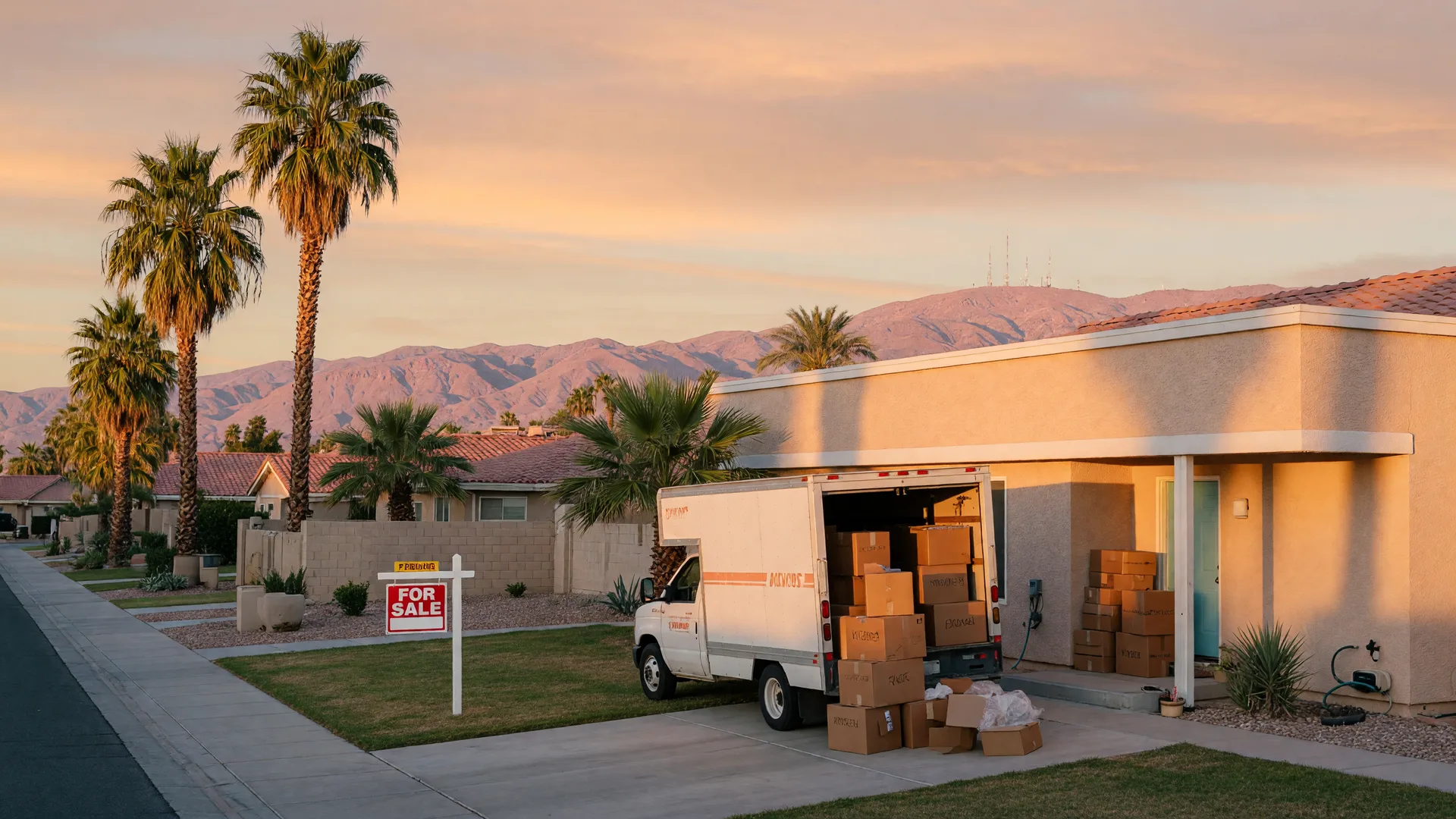
The most common mistake is trying to close on the exact day the lease ends. Escrow runs late, appraisals get delayed, and sellers miss their own deadlines. If your lease ends before closing, you are paying for a storage unit, a hotel, or a friend's couch while your furniture sits in a truck.
The safer plan is one to two months of overlap: you keep paying rent while your mortgage starts, then move once you actually own the home. Yes, that is two housing payments for a month or two. It is also the cheapest insurance you can buy for a smooth move, and it lets you clean, paint, or install flooring before you move in.
Budget for the overlap when you run your numbers. Two months of double housing costs is a real line item, and it belongs in your savings plan before you make an offer.
Negotiate the Closing Date Around Your Lease
Your offer can include a closing date that works for your calendar. In a balanced market, sellers often accept a closing date a few weeks out, and many are happy to close later if they need time to move themselves. A few tools to know:
- A closing date that falls a week or two before your lease ends gives you a buffer for delays.
- A rent-back agreement lets the seller stay in the home after closing for a set period while you finish your lease, but it makes you a landlord on day one, so keep it short and written.
- Seller concessions toward your closing costs can free up cash for the overlap months. Nevada contracts allow negotiated seller credits within lender limits.
Ask Lisa what the seller in your transaction is likely to accept. Timing terms are often easier to negotiate than price.
Get Your Financing in Order First
Your lease timing plan only works if your financing is real. A preapproval tells you what you can borrow, what your rate estimate looks like, and what documents you will need. Without it, you are guessing, and sellers know the difference. Prequalification vs. preapproval explains what each one means and why sellers care.
A few current numbers to frame your planning:
- The 2026 conforming loan limit for Clark County is $832,750 for a one-unit home, the baseline set for most of the country.
- The 2026 FHA limit for a single-family home in Clark County is $541,287.
- Down payment options start at 3% for many conventional loans, 3.5% for FHA, and 0% for VA loans for eligible veterans and service members. VA eligibility covers who qualifies.
Financing rules and limits change, and every borrower's situation is different. Lisa is not the source of underwriting rules; your lender is. Direct your preapproval, down payment, and program questions to the licensed loan originator on your team, and get answers in writing before you make an offer.
Run the Real Monthly Number
Rent is one number. A mortgage is a package. Your true monthly payment includes principal, interest, property taxes, homeowners insurance, HOA dues if the property has them, and mortgage insurance when your down payment is under 20%. Use the Mortgage Calculator and the Affordability Calculator to see the full picture, and the True Monthly Payment Calculator to compare properties that carry different HOA and tax loads.
Compare your current rent to the full monthly cost of the homes you are considering, not just the principal-and-interest number. A home that looks affordable on the listing price can surprise you once taxes, insurance, and HOA dues are added.
Save for the Overlap and the Move
Beyond the down payment and closing costs, first-time buyers who are renting need three extra buckets of cash:
- Overlap months: one to two months of rent plus mortgage.
- Moving costs: movers or a truck, boxes, and a few days off work.
- Immediate needs: blinds, a refrigerator if the home does not include one, a water heater tune-up, or small repairs the inspection flags.
The Down Payment and Home Buying guide and the buyer closing costs guide walk through the upfront numbers. How Much Home Can You Afford? ties the monthly picture together.
Use the Waiting Time Wisely
Every week between now and closing is a chance to prepare:
- Keep your credit clean: no new credit cards, no large purchases, no missed payments. Your preapproval is not a license to spend.
- Keep your documents organized: pay stubs, W-2s or tax returns, bank statements, and any gift fund letters.
- Research every home you seriously consider with a free Property DNA report before you write an offer.
- Read The Complete First-Time Home Buyer Guide and the Complete Las Vegas Homebuying Guide so no step surprises you.
A Sample Timeline
Here is what a comfortable four-month plan looks like:
- Month 1: Get preapproved, set your budget, and start comparing neighborhoods.
- Month 2: Tour homes, run the true monthly numbers, and narrow your list.
- Month 3: Make your offer, give your landlord written notice, and start packing.
- Month 4: Close, move, and enjoy one quiet month of overlap before your old lease ends.
If your lease ends in the middle of a month, so much the better. Closing mid-month and moving over a weekend is often smoother than trying to line up the first and last day of two different months.
The Bottom Line
Buying a home while renting is very doable, and most first-time buyers do exactly that. The plan is simple: get preapproved early, know your lease, give notice on time, and budget for overlap instead of gambling on a same-day close. The homes you want will still be there in a few months, but a lease you cannot unwind will not wait.
Ready to plan the timing? Lisa helps first-time buyers coordinate their lease, their financing, and their purchase calendar. Contact Lisa or call or text 702-743-4608.
